Radio Free Brooklyn spoke with DTN, a weather prediction service company, to find out how event coordinators manage the growing risk of severe weather impacts at festivals, performances, and other outdoor events.
Severe weather has become the norm nationwide, and New York City is not immune to the inconsistency that accompanies a changing climate. With summer heat and seasonal storm clouds rolling through the boroughs every week, some event organizers have begun to feel the repercussions. Last summer, the Executive Director of BRIC! Celebrate Brooklyn, Sadiah Blount said that predicting the weather was the most difficult challenge she and her team faced when organizing the outdoor concert series in Prospect Park.
Courtney Whitelocke, Vice President of Arts & Events at Brookfield Properties, shared a similar concern in our interview last month. She noted the difficulty of anticipating weather changes when organizing the Summer Soul Series for Manhattan West, a two-hour soul music performance hosted amid a group of mixed-use buildings. Some of the variables she and her team consider include wind, heat, and lightning. To better prepare, Whitelocke said her team contracts a weather preparation service through DTN, a global data and technology company, called WeatherOps.
Kevin Mahoney, Risk Communicator Team Lead at DTN, told Radio Free Brooklyn there’s been a 15 percent year-over-year increase in event coordinators reaching out for services.
“With the increase in extreme weather events, there’s going to be an increase in people who are in need of our services,” he said.
DTN implements a holistic approach to weather prediction, with end-to-end services that help events forecast, navigate day-of weather, and finalize performances. Mahoney said WeatherOps executes a three-prong approach to venue management. First, Weather Risk Communications assist organizers in considering all possible weather scenarios.
Next, the WeatherOps team helps coordinators manage performances on the day of the event. If there is a weather event forecasted, like thunderstorms or high heat, a meteorologist will assist event staff in determining what happens next. For example, meteorologists will guide staff through delaying doors or rescheduling to a rain date.
After the event is complete, the WeatherOps team will conduct a storm analysis and provide it to the organizers. If there are legal issues or insurance claims to be filed, the storm report helps make sure outside parties know the work that went into planning.
“We walk our clients through the whole journey to hopefully mitigate the impacts of the process,” Mahoney explained.
In over 10 years of being a meteorologist, Mahoney said his idea of what weather really encompasses has changed significantly. When he first started, he had a preconceived notion that his job would be simple: helping clients predict rain, lightning, and wind. The reality he entered was much different, with intricacies in weather proving to be multidimensional.
At one outdoor event located in a large open field, for example, Mahoney and his team realized a forecasted rainstorm could cause cars in the dirt parking lot to sink. Thinking quickly, his team coated the lot in a high-absorption mulch. At another event, the wind threshold for vendor pop-up tents was a concern. The WeatherOps team provided organizers with reinforced support to each tent, ensuring their stability throughout the event. Heat also has a significant impact on certain events, and preparing for high temperatures involves providing medical care, water—both at the gates and inside the venue—and shade coverings.
“There are so many aspects of weather that impact every small decision at a large event.” He said.
One recent change to meteorology is the introduction of AI. Mahoney explained that the industry has widely accepted the innovation, stating that AI is a tool that can help improve job performance and provide actionable decision support for customers. Manhoney said AI can be used for everything from standard weather forecast models to downstream applications, such as utility outage predictions. Like any AI model, though, Mahoney noted that the software has to be very well trained with high-quality data and scrutinized by experts to ensure its validity.
Mahoney said the team constantly monitors lightning prediction tools, such as radar and satellite signatures that can clue meteorologists in on a storm that hasn’t produced lightning yet, but may be gaining the strength to. This can give the WeatherOps team additional lead time before the first lightning strike even occurs.
“I think we’re still at the tip of the iceberg, so to speak, for where the real capabilities may be as the meteorology field continues the research and eventual application,” Mahoney explained.
For audience members looking to help protect themselves, Mahoney suggests being a “self participant in your own planning.” Many events have public weather policies, and even though a lot of outdoor shows enforce a rain or shine strategy, audience members should still develop an exit plan. That means taking notice of nearby exits and where they lead to, being cognizant of weather approaching the area, and bringing water bottles, rain gear, and hats.
“We plan for all the other stuff that happens, but the weather is always forgotten about, as events are rain or shine. But, if you have that plan, then you’ll know where to go in an emergency,” he said.
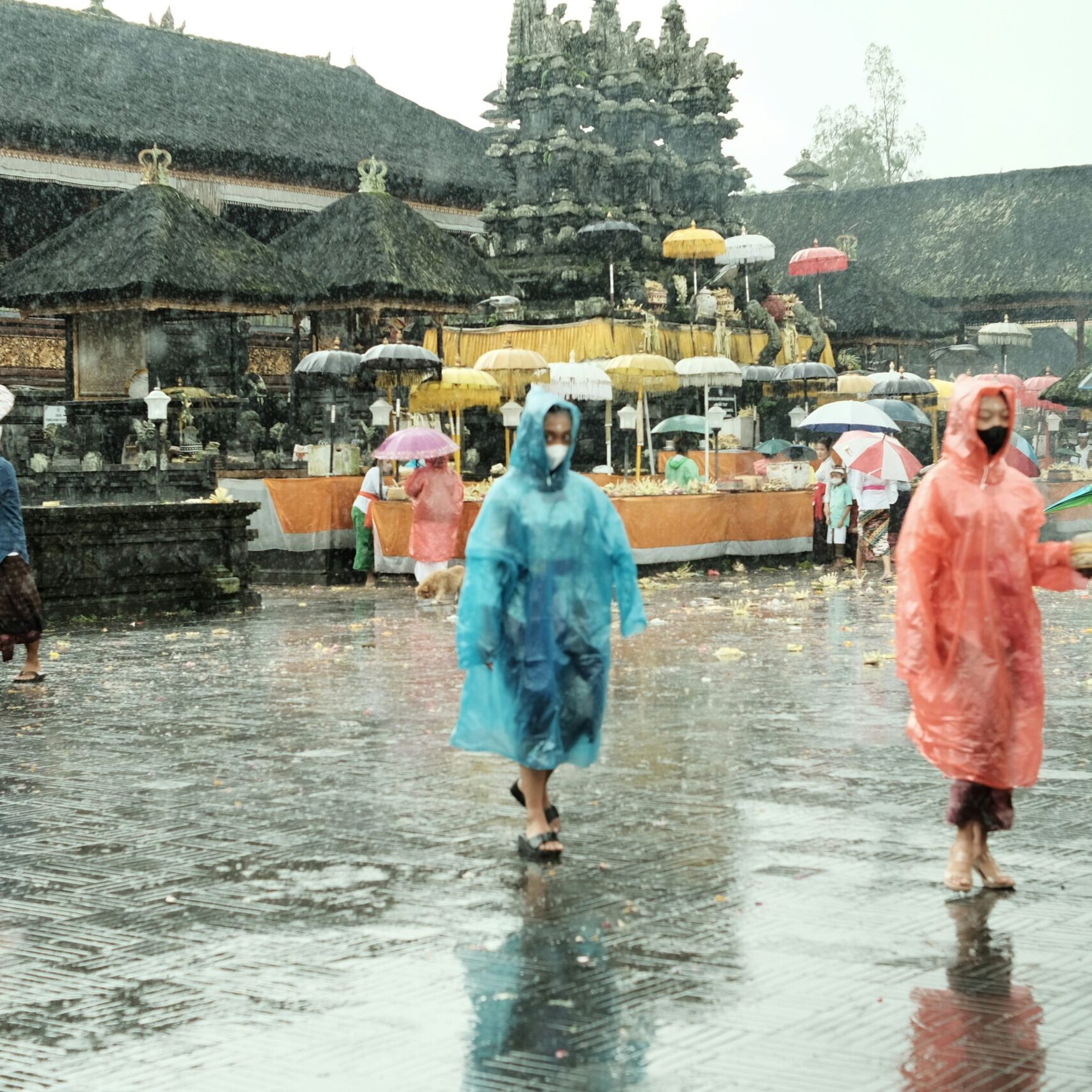
Photo by Aditya Nara on Unsplash